
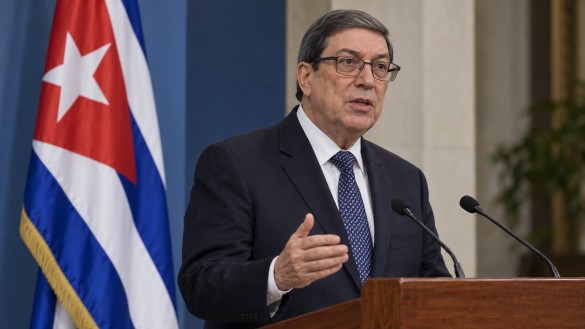
Cuban Foreign Minister Bruno Rodríguez has accused the United States of employing coercive tactics to sway international opinion ahead of a United Nations General Assembly vote on the U.S. trade embargo against Cuba. The resolution, scheduled for a vote on October 28, calls for an end to the decades-long embargo, marking the 34th time the issue has been presented to the General Assembly.
Rodríguez alleged that the U.S. government has resorted to political pressure and economic threats, including sanctions, punitive tariffs, and visa restrictions, to influence countries to oppose the resolution. He emphasized that the vote is a matter of national sovereignty, highlighting the right of nations to determine their own foreign policies without external interference.
The proposed resolution addresses the impact of fuel and energy restrictions imposed by the U.S. on Cuba in January 2026. The Cuban government contends that these measures have exacerbated the country’s economic challenges, which Rodríguez claims have resulted in more than $178.7 billion in losses over six decades due to the embargo.
In January, then-U.S. President Donald Trump signed an executive order implementing measures targeting countries and entities that supply fuel to Cuba. The Cuban government views these restrictions as an effort to increase pressure on its economy.
A similar resolution put forth by Cuba in the 2025 UN General Assembly garnered significant support, with 165 votes in favor, seven against, and 12 abstentions. As the upcoming vote approaches, the outcome remains uncertain amid ongoing diplomatic tensions between the U.S. and Cuba.