
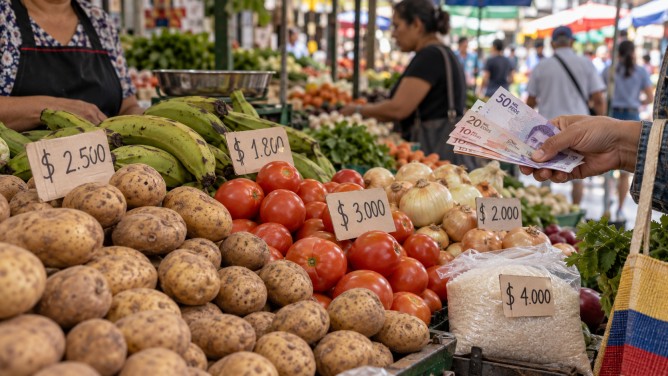
Colombia’s annual inflation rate rose to 6.29% in September 2026, marking an increase from 6.24% in August, as food prices continue to exert pressure on the cost of living. The month of September alone saw prices increase by 0.37%, pushing inflation to its highest level since July 2024. During the first nine months of 2026, consumer prices increased by 5.74%, compared to 4.55% during the same period the previous year.
Food prices remain a significant driver of inflation, with costs rising 0.78% in September and showing a year-on-year increase of 6.74%. Potatoes, in particular, saw a sharp price hike, surging 78% over a 12-month period. These increases are partly attributed to weather conditions and seasonal harvest cycles impacting agricultural supply. Additionally, education costs saw a notable rise, increasing by 1.43% in September, which was the largest monthly increase among all categories.
In response to persistent inflationary pressures, Colombia’s central bank recently raised its benchmark interest rate to 12.25%. This move reflects concerns that inflation has extended beyond food and utilities into other parts of the consumer basket. Nonetheless, some policymakers argue that higher interest rates have limited impact on price increases driven by essential expenses like food, housing, and utilities.
Despite these challenges, there are signs of moderation in some sectors. Inflation, excluding food and regulated prices, decreased from 6.27% to 6.18%, marking the first decline after six consecutive months of increases. However, economists warn that food prices are likely to remain a major source of inflationary pressure through the end of 2026. Their forecasts have become more pessimistic as the year progresses, with expectations that the inflation rate will stay above the central bank’s target.
The rising inflation figures are also expected to influence ongoing discussions regarding Colombia’s minimum wage for 2027. As living costs increase, negotiations between workers, employers, and the government are likely to factor in these economic pressures.