
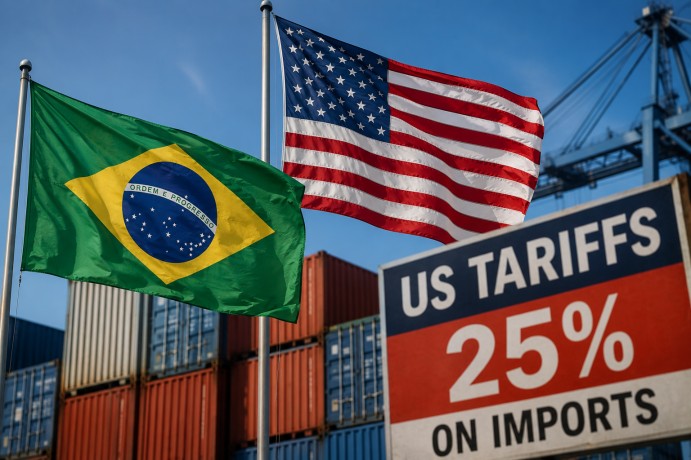
The United States has decided to impose a 25% tariff on certain Brazilian goods beginning July 22, a move that has drawn strong criticism from Brazil, which considers the tariffs unjustified. In response, the Brazilian government has firmly denied engaging in any unfair trade practices and has voiced its opposition to the new tariffs announced by Washington.
The tariffs will target specific Brazilian imports, although key products such as coffee, beef, oranges, orange juice, select oil and gas products, and aerospace components have been exempted to prevent disruptions in the supply chain. According to the US Trade Representative, the decision follows an investigation that concluded Brazil engages in several unfair trade practices, including inadequate enforcement of anti-corruption measures and unreasonable trade policies.
The US asserts that these tariffs are necessary to ensure fair competition for American businesses and workers. Despite the implementation of these measures, US officials have indicated that negotiations with Brazil remain open, suggesting that dialogue is still possible.
In a related statement, US Secretary of State Marco Rubio accused the administration of Brazilian President Luiz Inácio Lula da Silva of not negotiating in good faith. Rubio claimed that Brazil’s economic policies have had adverse effects on both American and Brazilian interests.
Brazil, however, has rejected these accusations and continues to stand against the tariff measures. The South American nation maintains that its trade practices are fair and that the US’s decision to impose tariffs is unwarranted.