
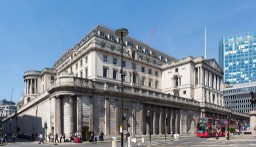
The Iran war has brought unexpected clarity to the UK energy policy debate, forcing a recognition that the country’s dependence on global fossil fuel markets is not merely an environmental concern but a direct threat to macroeconomic stability, as the Bank of England voted unanimously to hold rates at 3.75% and warned of potential rate hikes driven by energy price inflation. The monetary policy committee’s explicit identification of the war’s energy market impact as the primary driver of the UK’s changed inflation outlook has elevated energy security to a macroeconomic as well as an environmental and security priority. Officials warned that the conflict could push inflation above 3% and require monetary policy tightening.
The clarity provided by the Iran war episode is that energy dependence creates direct macroeconomic vulnerability. When global energy prices rise because of geopolitical conflict, UK inflation rises, the Bank of England is potentially forced to raise rates, households face higher bills and mortgage costs, and economic growth is dampened. This causal chain from energy dependence to macroeconomic instability provides a clear economic case for energy policy reform that complements the environmental and national security arguments already in play.
Governor Andrew Bailey’s explicit call for restoring disrupted energy supply lines was an acknowledgement of the energy policy dimension of the Bank’s inflation challenge. He said the most effective solution to the UK’s inflation problem was beyond the Bank’s direct control, pointing toward the policy levers held by the government and the international community. His statement made the Bank’s implicit policy recommendation clear, even without explicitly directing government action.
Financial markets focused on the immediate monetary consequences rather than the policy reform dimension. UK gilt yields rose, the FTSE 100 fell, and the pound strengthened against the dollar as traders priced in rate hikes before year end. Analysts noted that the energy policy clarity provided by the crisis was unlikely to translate into immediate policy changes, given the years required to transform energy infrastructure.
For UK energy policy, the clarity delivered by the Iran war creates an opportunity to build greater political and public consensus around the investment needed to reduce fossil fuel dependence. The direct link between energy imports and household bills, mortgage costs, and Bank of England rate decisions provides a more immediate and personal argument for energy system transformation than abstract discussions of climate change or energy security. The political challenge is to channel the clarity of the current crisis into sustained policy commitment.