
Prime Minister Sanae Takaichi’s explanation that she was responding to hypothetical questions about potential scenarios involving Taiwan has done little to mollify Chinese concerns or prevent real economic consequences from materializing across multiple sectors of the Japanese economy. While Takaichi maintains that she “didn’t intend to mention any specifics” and was simply “answering sincerely within that context” when questioned about Taiwan scenarios, Beijing has viewed her willingness to discuss potential military involvement as a significant departure from decades of diplomatic caution.
The distinction between hypothetical discussion and policy commitment has proven diplomatically irrelevant from China’s perspective. Chinese foreign ministry spokeswoman Mao Ning has made clear that Beijing’s demands remain unchanged regardless of how Takaichi frames her original remarks: Japan must retract what China terms “erroneous remarks” and explicitly reaffirm commitment to the “One China” principle. This reflects China’s view that public discussion of military scenarios itself represents a problematic shift in Japanese policy.
The economic consequences are already substantial and growing. China has issued travel advisories warning citizens about alleged safety concerns in Japan, threatening to significantly reduce tourist arrivals that had reached over 8 million in the first ten months of this year and represented 23% of all international visitors. Economist Takahide Kiuchi projects that reduced tourism alone could cost Japan approximately $11.5 billion and reduce annual economic growth by 0.3 percentage points based on precedents from the 2012 island dispute.
Beyond tourism, multiple dimensions of bilateral exchange are experiencing disruption. Japanese movie releases in China have been postponed, entertainment events cancelled, and concerns are mounting about potential trade restrictions including continued enforcement of seafood import bans and possible limitations on rare earth exports critical to Japanese manufacturing. Small businesses throughout Japan are seeing immediate impacts, with traditional cultural experiences experiencing mass cancellations extending months into the future.
Takaichi has emphasized her commitment to maintaining positive relations with China as discussed during her first meeting with President Xi Jinping last month, seeking to balance domestic security concerns with economic and diplomatic interests. However, international relations experts note that domestic political constraints in both countries make de-escalation challenging. Sheila A. Smith observes that leaders cannot afford to appear weak before their respective audiences, while Professor Liu Jiangyong indicates that China will continue implementing countermeasures gradually, suggesting the crisis resulting from Takaichi’s hypothetical response may have prolonged real-world consequences.
Japanese Prime Minister’s Taiwan Hypothetical Triggers Real Economic Consequences
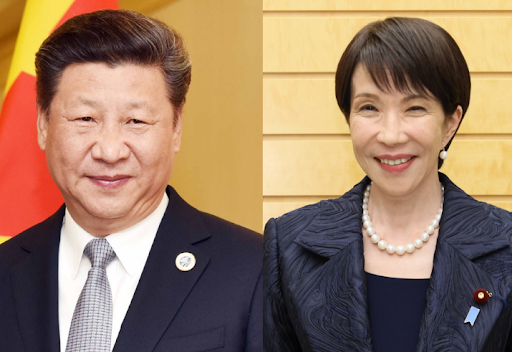
Picture credit: www.commons.wikimedia.org
41
previous post